- Biodegradable, Disc Golf, Hubble, PHA, PHAse 1, Sustainability
- Matt B
Hubble PHAse 1: The First PHA Disc Golf Disc Ever Approved by the PDGA
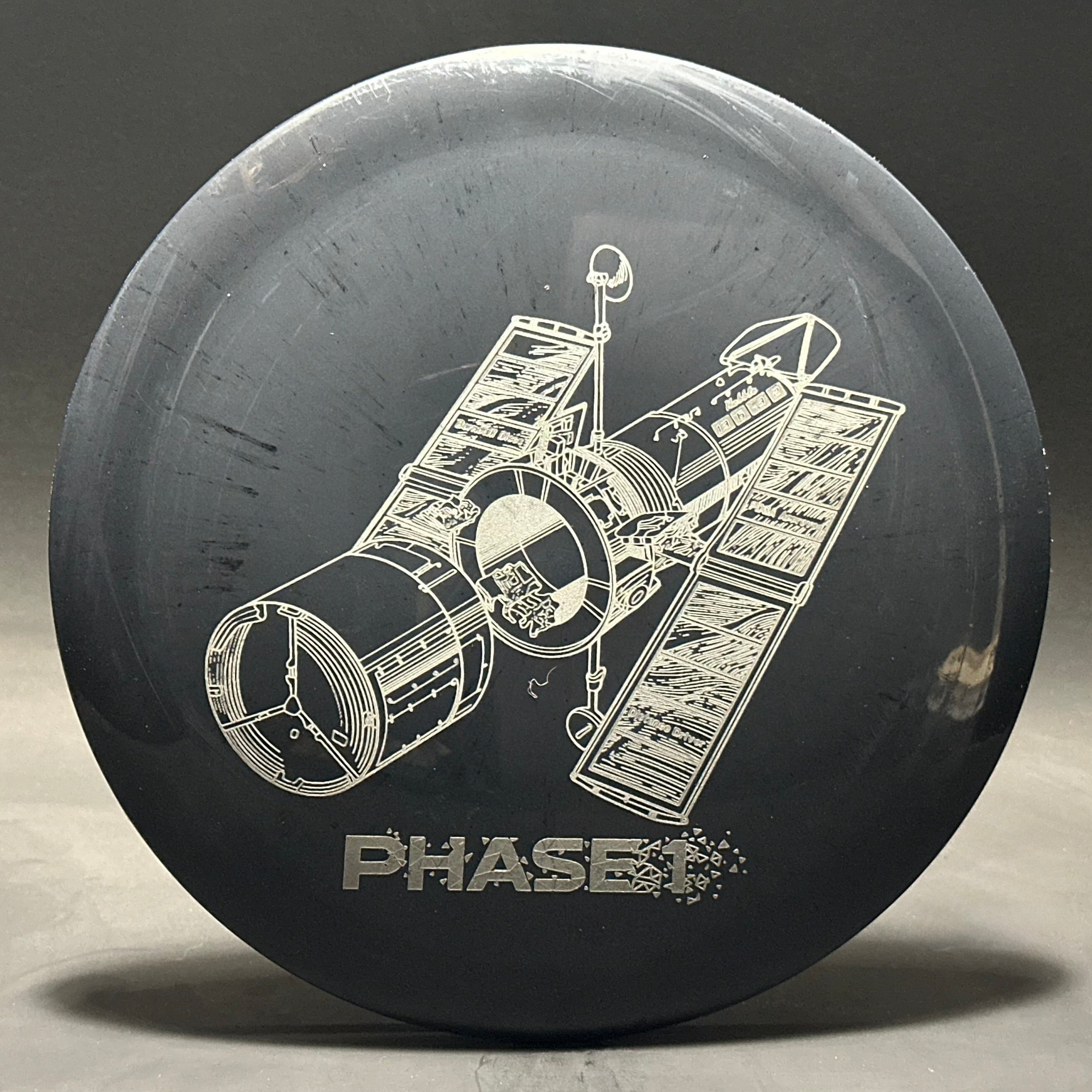
On February 23, 2026, something happened in disc golf that had never happened before. The Hubble PHAse 1 became the first disc golf disc in history to receive PDGA approval made from PHA, the only plastic certified to biodegrade in soil, freshwater, and marine environments. PHAse 1 is the name of our PHA material, submitted, tested, and approved by the PDGA, and it is what makes this disc unlike anything else in the sport. Not just the first distance driver made from PHA. The first disc of any kind. The Hubble is available in multiple materials, but it is the PHAse 1 that carries this distinction.
The Hubble was built for distance. It is an understable driver designed to generate a long sweeping S-curve for power throwers, opening up at high speed before finishing with a controlled fade. By every standard the sport uses to evaluate a distance driver, it performs.
That performance did not come easily. PHA has existed as a material for decades, used primarily in medical devices and food packaging where the demands are entirely different from what disc golf requires. A distance driver needs to survive hundreds of throws without warping, cracking, or losing its flight characteristics. It needs consistent weight distribution down to fractions of a gram. It needs to hold a rim geometry that performs predictably across a range of throwing styles. PHA in its base form was not designed for any of that.
The years we spent developing the Hubble were not spent marketing a concept. They were spent working through formulation after formulation, refining the compound, and dialing in an injection molding process for a material that behaves nothing like conventional plastics. PHA is notoriously difficult to process. Small deviations at any stage of production can compromise an entire run, and getting it to consistently meet the weight tolerances and geometric precision that a PDGA-approved disc requires took a level of process control that only comes from years of hard-won experience. There were batches that warped. Runs that cracked at the rim. Prototypes that flew nothing like they should have. Each failure pointed toward a solution, and eventually the solutions stacked up into a disc that performs at the level the sport demands.
When the certification came through, it meant the work was done. PHAse 1 had cleared every technical standard required for sanctioned play, something no biodegradable plastic had ever done in the sport before.
Why does this matter beyond disc golf? Because plastic pollution is one of the defining environmental problems of this century, and the reason it is so difficult to solve is that conventional plastic is extraordinarily good at what it does. It is durable, lightweight, moldable into almost any shape, and cheap to produce. Replacing it requires finding materials that match those properties while also breaking down when they enter the environment. PHA does that. It is produced by bacteria fermenting plant-based feedstocks, it biodegrades completely in soil and water without leaving microplastic residue, and it can be injection molded into complex shapes with tight tolerances.
Disc golf is not going to solve plastic pollution, but proving that a high-performance product in a demanding application can be made from PHA and meet the same standards as conventional plastic matters. It expands what the material is understood to be capable of. Every application that successfully makes the switch builds the case that this is a viable path forward, not a compromise.
The Hubble is a distance driver. It is also a proof of concept for something larger than the sport it was built for.